
Although Artificial Intelligence (AI) is rapidly transforming research, education and innovation around the world, many institutions in Uganda continue to face barriers to adopting AI technologies. According to the United Nations Educational, Scientific and Cultural Organisation (UNESCO)’s 2026 Artificial Intelligence Readiness Assessment for Uganda, the country is still strengthening its readiness for the responsible adoption and governance of AI, with digital infrastructure, technical capacity, research capability and AI governance identified among the key priorities for accelerating AI adoption across sectors. Limited access to AI infrastructure, inadequate technical capacity and the shortage of locally relevant AI solutions, particularly those that support African languages, have slowed the ability of researchers, educators and students to fully harness the technology’s potential.
These challenges mirror broader digital infrastructure gaps within Uganda’s education sector. A 2026 Digital Education Gap assessment conducted by the United Nations Children’s Fund (UNICEF), the Ministry of Education and Sports (MoES) and partners across 3,276 secondary schools found that more than one-third of schools have no Internet access, while only about 12% have campus-wide Internet connectivity, highlighting the need for expanded digital infrastructure to support AI-enabled learning and research.
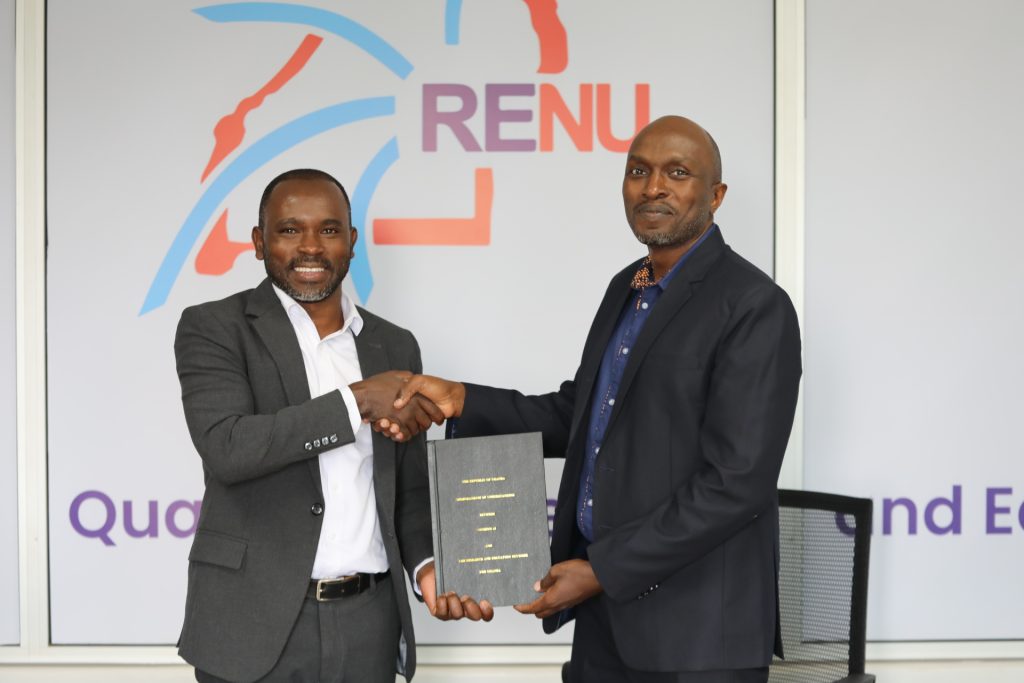
To help address these challenges, the Research and Education Network for Uganda (RENU) and Sunbird AI have signed a Memorandum of Understanding (MoU) to collaborate in advancing AI-driven research, education and digital transformation across Uganda. The MoU was signed on Wednesday, 1st July 2026, during a ceremony held at the RENU Secretariat in Kololo, Kampala, by the RENU Chief Executive Officer (CEO), Nicholas Mbonimpa, and Sunbird AI Executive Director, Dr. Ernest Mwebaze.
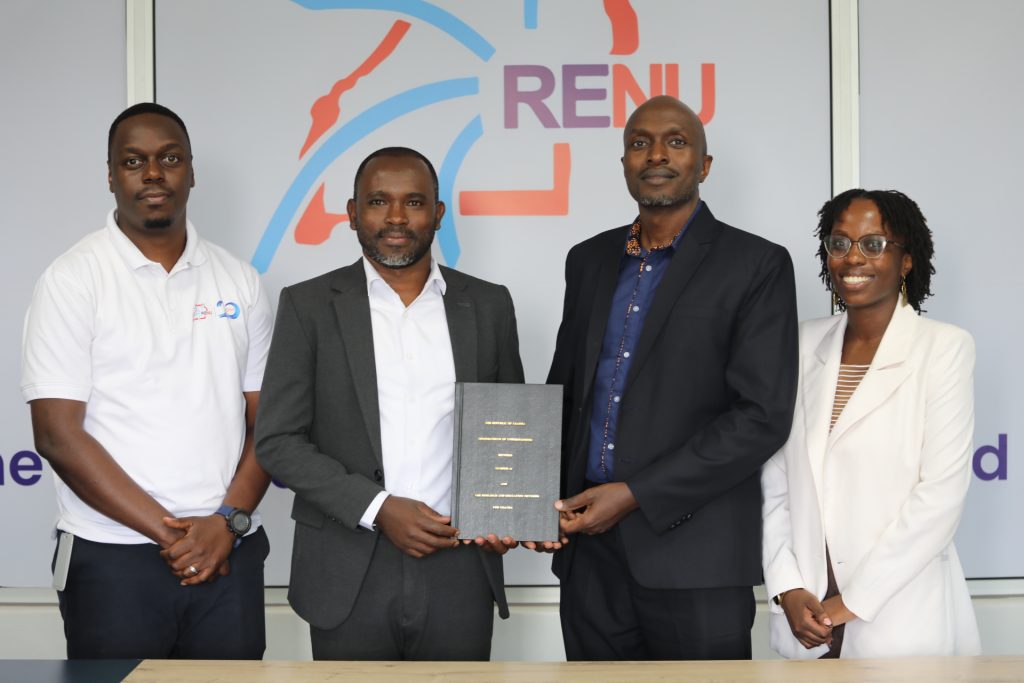
The partnership brings together two organisations with complementary strengths. As Uganda’s National Research and Education Network (NREN), RENU provides the digital infrastructure that powers research and education, connecting more than 1,200 campuses with high-speed Internet, cloud services, cybersecurity, identity federation and other advanced digital solutions that support collaboration, innovation and knowledge sharing. On the other hand, Sunbird AI, a Ugandan non-profit entity, is one of East Africa’s leading AI research organisations, renowned for developing practical AI solutions tailored to African contexts, including African language technologies, speech systems, geospatial analytics and decision-support tools. Sunbird AI is best known for its flagship product, Sunflower, a localised, multilingual large language model that supports 30+ Ugandan languages and outperforms major global models on regional translation tasks.
By combining RENU’s nationwide research and education infrastructure with Sunbird AI’s expertise in developing locally relevant AI technologies, the two organisations aim to accelerate the adoption of AI across Uganda’s research and education ecosystem while ensuring that AI solutions are accessible, inclusive and responsive to local needs. Through this partnership, RENU and Sunbird AI seek to advance AI technologies that better understand African languages, opening new opportunities for educators and students to fully participate in the digital world. Additionally, the partnership is destined to bridge the rural-urban education gap ensuring that all learners access quality learning materials and comprehend complex concepts regardless of where they live. This initiative will contribute greatly to Uganda’s national development efforts to improve the uptake and student performance in Science, Technology, Engineering and Mathematics (STEM) subjects countrywide, which also aligns with RENU’s mission to facilitate national development through the provision of digital solutions for research and education.
A key area of collaboration will be the development and deployment of African language technologies. Uganda is home to more than 40 living indigenous languages, making it one of Africa’s most linguistically diverse countries. Yet many mainstream AI systems remain optimised for high-resource global languages, limiting accessibility for many users. UNESCO’s 2025 work on AI and the future of education in Africa identifies the development of African language technologies as an important step towards improving digital inclusion, expanding access to education and ensuring that AI benefits all communities. UNESCO, through its Global Education Monitoring Report (GEM Report) update in June 2026, further indicates that 40% of the world’s population does not have access to education in a language they understand, which results into substantially lower academic achievement because students frequently struggle with understanding lectures, participating in discussions, academic writing, and examinations when instruction is in a foreign language. Therefore, through this partnership, RENU and Sunbird AI will work to promote AI systems that understand and support African languages, enabling more inclusive learning, research, and digital services.
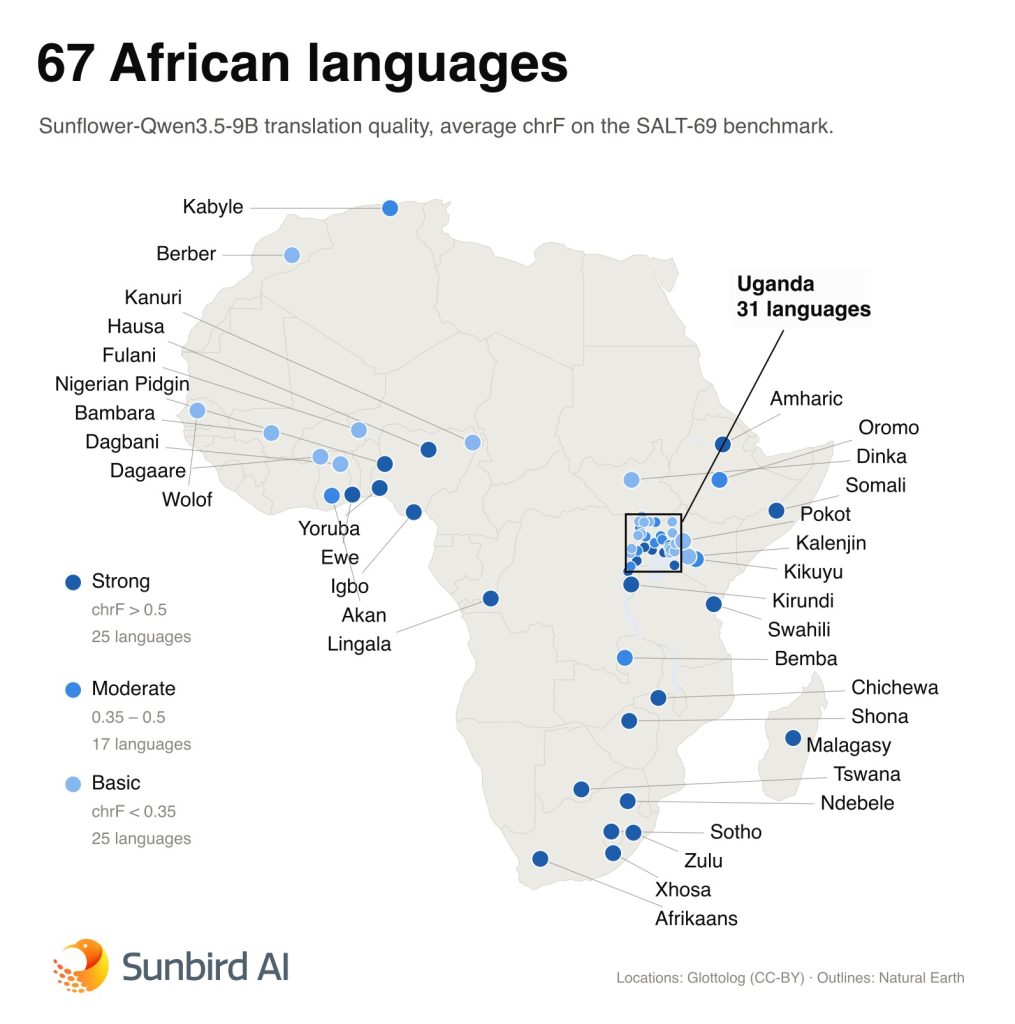
A map showing Sunbird AI Translation Quality Across 67 African languages.
The collaboration will also focus on integrating AI-enabled services within RENU’s digital infrastructure, undertaking joint research and innovation, building AI capacity among researchers and students, developing curricula and promoting responsible AI practices. This aligns with UNESCO’s 2025 recommendations encouraging African countries to invest in AI skills, research partnerships and locally developed technologies that respond to national development priorities while promoting responsible and ethical AI adoption.
Speaking during the signing ceremony, the RENU CEO Nicholas Mbonimpa said the partnership marks an important step in enabling Uganda’s research and education community to benefit from practical AI applications.
“Over the years, RENU has built a countrywide network and currently connects more than 1,200 campuses of education and research institutions across Uganda to our high-speed backbone. Sunbird AI, on the other hand, has developed AI systems that support more than 30 Ugandan languages. One of the biggest opportunities before us is African language technologies that plug directly into the education systems. This partnership brings together our complementary strengths to ensure that more learners, researchers and institutions can benefit from AI that is relevant to our local context.”
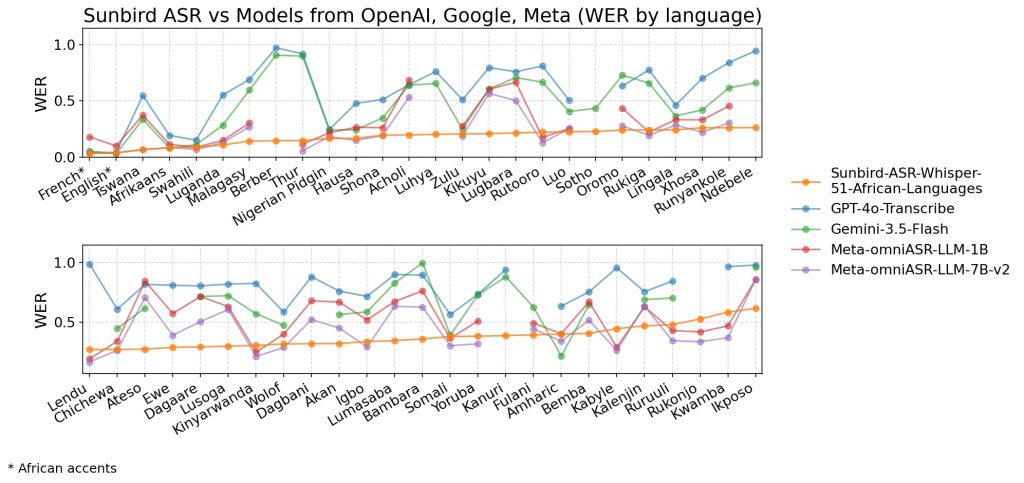
A graph showing Word Error Rate (WER) Comparison of Sunbird AI ASR with Leading Models from OpenAI, Google and Meta across 40+ African languages.
The Sunbird AI Executive Director, Dr. Ernest Mwebaze, added that Uganda’s linguistic diversity presents an opportunity to develop technologies that are more inclusive and accessible to local communities.
“Uganda is one of the most diverse countries, with people speaking many different languages. People understand concepts in different languages, so building technologies that allow them to learn and access information in the languages they understand is important. Working with RENU, which has a network that reaches universities and is expanding into secondary schools, will amplify this work. Because we are both practical research organisations, this partnership creates an exciting opportunity to discover what more we can do with AI in education. Together, we will undertake capacity building, develop open-access solutions for Africa, and raise awareness to foster greater adoption of AI solutions within our education system.”
The partnership reflects the shared commitment of RENU and Sunbird AI to harness AI to strengthen research, improve education outcomes and accelerate Uganda’s digital transformation. By combining advanced digital infrastructure with locally developed AI technologies, the two organisations aim to empower institutions with the tools, skills and collaborative environment needed to drive innovation and solve national development challenges.