
The Metro eduroam Revolution in Uganda
Overview
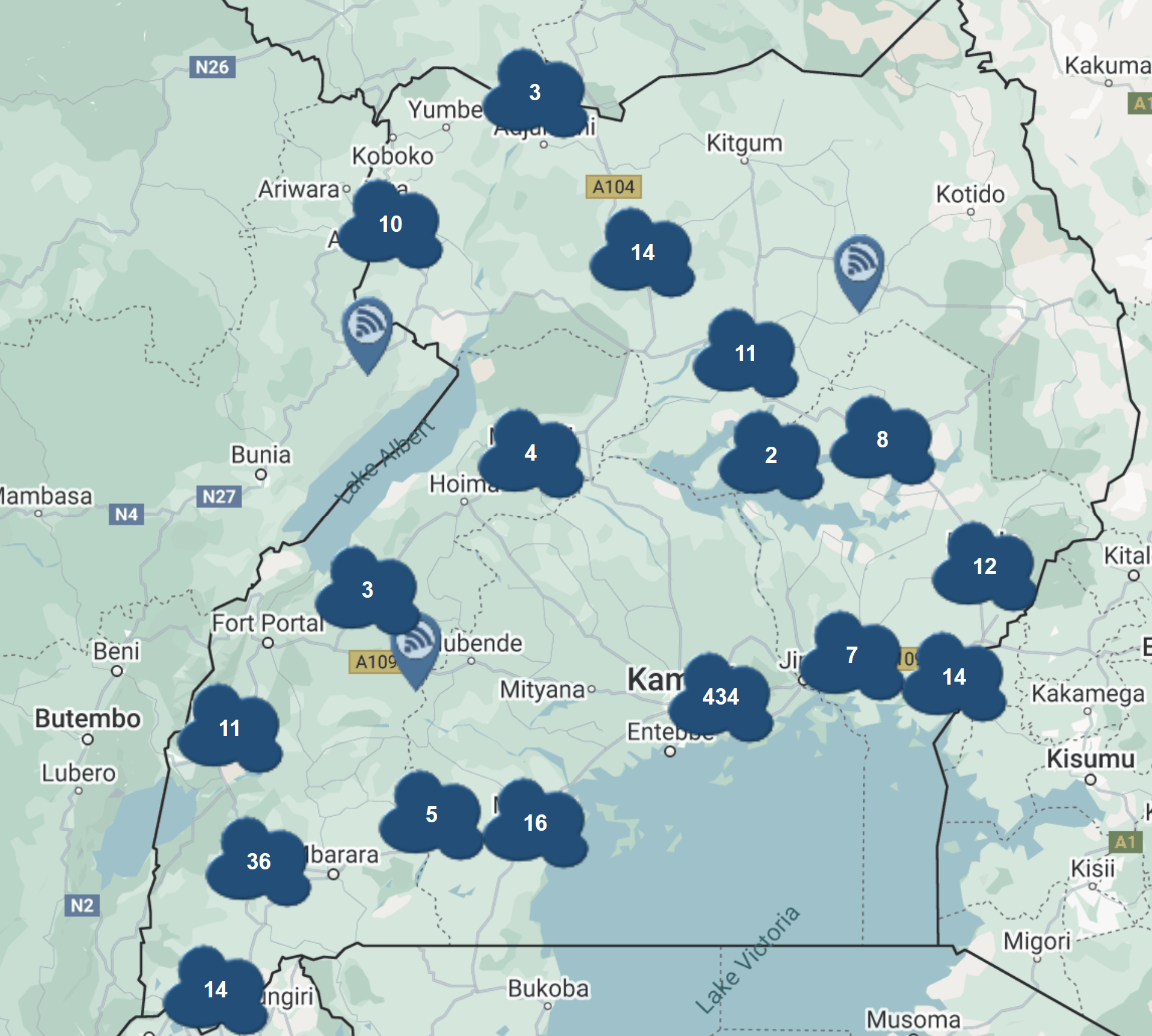
Metro eduroam is a nationwide initiative by the Research and Education Network for Uganda (RENU) to extend secure, seamless, and free Wi-Fi beyond university campuses into public spaces. Introduced in response to the COVID-19 lockdown, Metro eduroam has evolved into a national connectivity solution powered by locally manufactured solar routers. It now supports thousands of students, researchers, and academic staff across Uganda, enabling reliable off-campus learning and research.
Objectives
- Provide free, fast, and secure off-campus internet for learners and academic staff.
- Reduce reliance on expensive mobile data and improve access to e-learning.
- Expand Wi-Fi coverage to underserved and rural communities.
- Strengthen Uganda’s digital research and education ecosystem.
Stakeholders / Beneficiaries
- Students, researchers, and staff across Ugandan institutions.
- RENU and RENUMESH Technologies.
- Hostels, public libraries, innovation hubs, and communities with hotspots.
- Universities adopting eduroam and Metro eduroam as core connectivity infrastructure.
Implementation / Approach
Initial Deployment:
In 2020, RENU launched Metro eduroam with over 300 hotspots across Kampala, Entebbe, and Mukono using commercial infrastructure. Although impactful, this approach suffered from cost inefficiencies, equipment shutdowns, power outages, and limited service visibility.
Transformation Phase (2022–2024):
RENU deployed over 150 solar-powered routers manufactured in Uganda by RENUMESH Technologies. These robust, energy-independent devices allowed expansion to 18 more towns. RENU partnered with Mesh++ for technical collaboration on the routers.
Key Activities:
- Deployment of solar-powered routers resilient to outages.
- Expansion of Metro eduroam to over 500 national hotspots.
- Training for institutions to integrate eduroam into learning systems.
- Launch of the eduroam Spot App to help users find hotspots.
Results / Outcomes
- Bandwidth demand increased from 100 Mbps (2022) to 1 Gbps (2025).
- Institutions on eduroam grew from 19 (2019) to 353 (2025).
- Students’ mobile data expenses significantly reduced.
- Improved participation in e-learning and research activities.
- Hostels with eduroam hotspots saw increased occupancy.
- Some institutions adopted eduroam as their only SSID.
Future Work
- Scale national hotspot deployments further.
- Introduce eSIM-based eduroam access.
- Strengthen monitoring systems for better service analytics.
- Enhance collaboration with communities, institutions, and local innovators.
Conclusion
Metro eduroam has revolutionized Uganda’s digital environment by making research-grade internet accessible nationwide. Its impact on education, research, and digital inclusion continues to grow as RENU advances connectivity innovation.