Expanding eduroam Connectivity to Secondary Schools Across Uganda
Overview
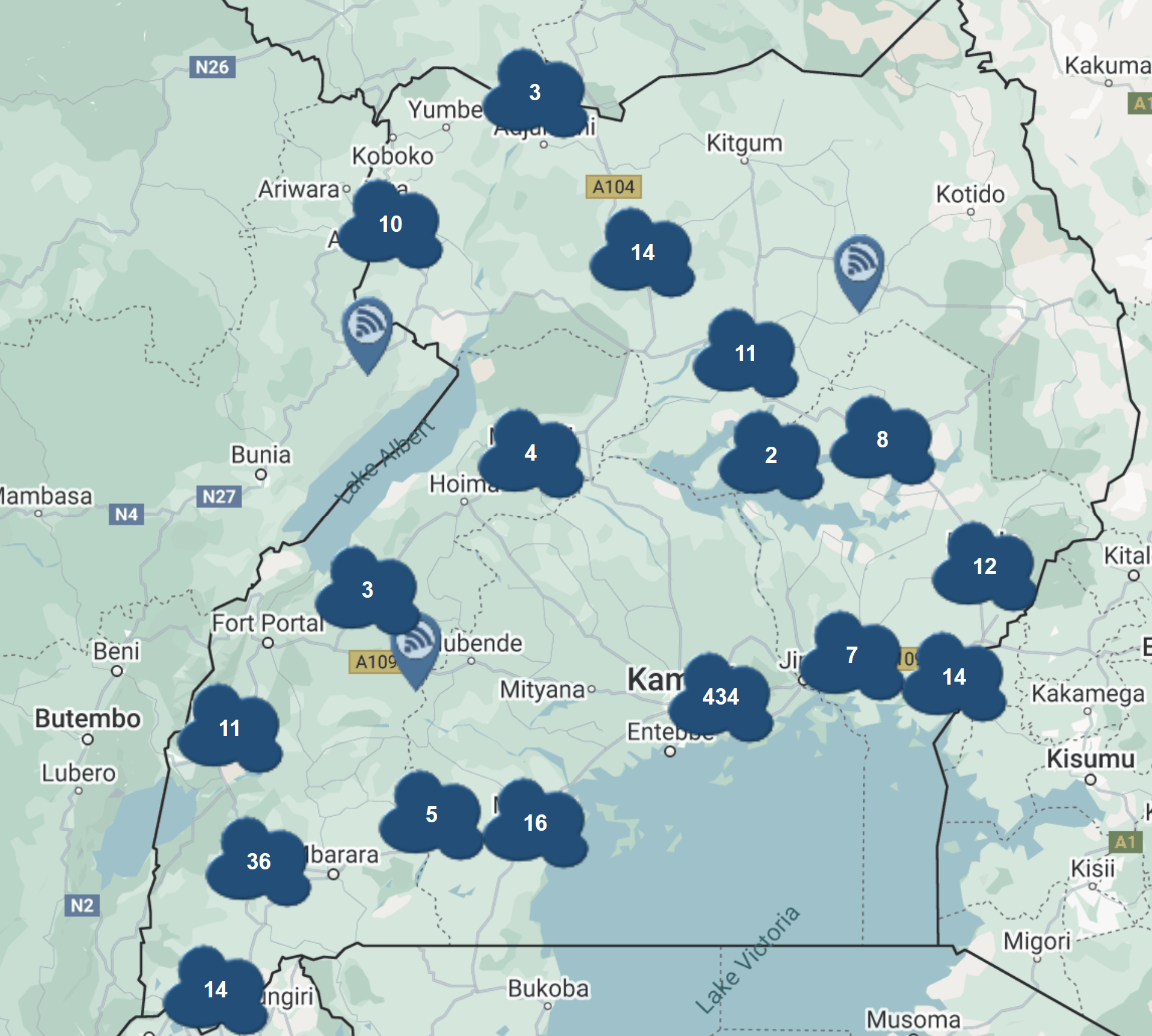
The Expanding eduroam Connectivity project is a national effort led by the Research and Education Network for Uganda (RENU), supported by the Internet Society (ISOC). The project extends eduroam, a global secure Wi-Fi roaming service for the research and education community, to secondary schools across Uganda. Implemented in two phases, the initiative successfully delivered seamless, secure internet access to 147 schools, enabling students and teachers to benefit from research-grade connectivity.
Objectives
- Provide secure, reliable internet access to secondary schools.
- Enhance digital learning through improved access to educational resources.
- Strengthen ICT capacity among teachers and school administrators.
- Reduce the digital divide by prioritizing under-served rural and urban schools.
- Promote early adoption of research and digital skills among learners.
Stakeholders / Beneficiaries
- Students, teachers, and school administrators.
- ICT personnel within secondary schools.
- RENU and ISOC as implementing and funding partners.
- Communities surrounding beneficiary schools.
- Uganda’s national education ecosystem.
Implementation / Approach
Phase One (2022):
RENU deployed eduroam infrastructure in 74 secondary schools, installing 174 Wi-Fi access points. This initial phase focused on urban and semi-urban schools with existing ICT readiness, allowing rapid deployment. Training was conducted for ICT teachers and administrators to ensure they could support users and manage the system.
Phase Two (2023):
The second phase extended connectivity to 73 additional schools, emphasizing rural and underserved areas. RENU installed 136 Wi-Fi access points, navigating challenges such as power shortages, limited backbone infrastructure, and logistical constraints. Through close collaboration with local stakeholders, the installations were successfully completed.
Technical Deployment:
- Installation of secure Wi-Fi access points.
- Integration with RENU’s national eduroam authentication infrastructure.
- Training in eduroam configuration, management, and troubleshooting.
- Monitoring usage trends and field testing at each site.
Results / Outcomes
- 147 secondary schools across Uganda successfully connected to eduroam.
- Improved access to global learning resources for thousands of students.
- Strengthened ICT capacity through hands-on training and technical exposure.
- Increased digital literacy and readiness for higher education.
- Reduced digital inequality by extending high-quality connectivity to remote regions.
Future Work
- Extend eduroam to remaining schools and community learning spaces.
- Improve infrastructure resilience through solar backup systems.
- Continue strengthening ICT capacity across all beneficiary institutions.
- Establish usage dashboards and monitoring systems for better insight.
Conclusion
The project has demonstrated the transformative impact of providing research-grade connectivity at secondary education level. By enabling secure access to digital tools and global resources, RENU and ISOC have significantly advanced Uganda’s digital inclusion efforts and strengthened the foundation for a modern education ecosystem.